10 Female-Led Podcasts To Listen To Right Now

As you know, we live and breathe podcasting here at Content is Queen. So, we wanted to share ten of our favourite female-led podcasts we think you should listen to – handpicked by our incredible founder, Imriel Morgan. *Disclaimer* We’re immensely proud to say all of the podcasts featured here are either made by, with or supported by Content is Queen. There are SO many incredible indie podcasters killing it right now – we wish we could feature you all, but we’d be here forever. 

*(Relate)able

The list starts strong with the incredible *(Relate)able podcast brought to you by Fiona Compton, Sherween Gonzales and Chantal Miller. Serving as a safe space for raw conversations created with Black people in mind, *(Relate)able explore relationships, friendships, family, and so much more. A stand-out for me this year was the “Yo Mama” episodes.  

Honey and the Hex

If you don’t already know about Honey and the Hex, get to know. This insightful podcast by siblings Tansie and Tatum Swithenbank explores the weird and wonderful origins, traditions, and intersections of folklore. It’s progressive, captivating and genuinely brilliant. If you’ve ever found yourself wondering if Santa is a milk ‘n’ cookie inhaling deity in disguise, this is the episode you should start with. 

The Revolution Begins at Home

While it only started relatively recently The Revolution Begins at Home has stood out to me. This podcast sees host Chantelle Lewis explore activism through the work and experiences of activists and advocates about their work, influences, and roadblocks. For a refreshing look at activism through the lens of changemakers, I’d recommend starting from the very first episode. 

Grazing Hell

Dubbed the ONLY podcast made by a cow, Grazing Hell is as enjoyable as this introduction suggests. Each week, host Tara Mooknee discusses internet culture politics, gender and how weird the world is. Expect spicy takes, honest conversation and a decent dose of humour with every episode. An episode I particularly enjoyed was all about the spooky monsters that are insecure dudes. 

Sustainably Influenced

Sustainability is a popular topic, making it a noisy space in the podcast world. Cutting through the noise are influencers Bianca Foley and Charlotte Williams as they guide listeners through the complexities of sustainability with weekly instalments of Sustainability Influenced. Not sure where to start? I’d recommend Colonialism, climate change & consumerism; listen here.   

Surviving Society

Brought to you by Dr Chantelle Lewis & Tissot Regis, Surviving Society explores race and class’s local and global politics. Offering fresh takes, incredible guests and a whole lot of curiosity, this is a sociology podcast that should be on your radar. One of my favourite episodes to date was with Rima Saini as she returned to the show to discuss her research on South Asian middle classes, politics, and so much more – listen here. 

The Anthill – Climate Fight Series

As a show made for curious minds, The Anthill explores everything from science, history and psychology to politics and economics. In October 2021 ahead of the COP26 climate summit, The Anthill launched the Climate Fight Series, produced by Tiffany Cassidy and series editor Gemma Ware which explores how we will actually tackle the climate crisis and the young people leading the way – I was hooked! Listen to the five-part series here.  

The WOW Podcast with Jude Kelly

Brought to you by The WOW Foundation, the WOW Podcast with Jude Kelly champions badass women and girls while taking a frank look at the obstacles in their way. If you’re in search of empowerment and inspiration, you’ve found it here. Not sure where to start? I’d recommend Women, Money and Power.  

Seeing Saw: The Official Spiral Podcast

Horror fans, if you’ve not come across Seeing Saw: The Official Spiral Podcast, you’re in for a real treat! Trapping listeners in the world of one of horror’s greatest franchises, film critics and Saw fans Catherine Bray, Anna Bogutskaya and Charlie Shackleton explore the complex film series that changed horrors forever. Trust me; you’ll be hooked after one episode.  

Art Heaux

Last but certainly not least is Art Heaux, brought to you by brilliant hosts Maggie Ibiam and Ola Olayinka. Formerly known as Displaced Ppl, Art Heaux is a podcast dedicated to finding your place in the creative industry and the worlds that surround it. From finding your confidence and achieving your goals to the power of manifestation and collaboration, I truly enjoy the takes fresh from the dynamic duo. 

If you’re looking to join an inclusive and supportive podcasting community, we’re ready to welcome you with open arms. Find out more about our affordable membership here.  

Podcasting With Purpose

Because without purpose, what’s the point? While we’re not saying it’s easy to start a podcast, there are a lot of people taking to the mic. As podcasting becomes more and more popular, purpose is what will set you apart from everyone else. In this short and sweet article, we’re sharing five of our top tips for podcasting with purpose. 

Do your research

Before taking on the role of host, you must do your research. From getting your head around technology and nailing your marketing strategy to improving your skills as a host and choosing topics, you need to know your stuff to deliver a quality show. If you’re not willing to put in the hours, you’ll fail at the first hurdle. 

Know your niche 

While you could start a podcast on a whim with no prior planning, we advise against it. Instead, know your niche and determine the theme of your show. Then, choose a topic/set of topics that you’re genuinely passionate about. While some people will tell you to choose something you’re knowledgeable about – we believe you should put passion first. 

Listen to understand 

If you plan to invite guests onto your podcast, you’ll want to brush up on your listening skills. An essential part of being a great host is being a good listener. When you can listen to understand as opposed to responding, the outcome will be so much better. Ask thoughtful questions, dig deeper and don’t be afraid to admit when you don’t know the answer – vulnerability will help you connect with your listeners.  

Add value with every episode 

Adding value comes with knowing your niche and, with time, your audience. If you want repeat listeners, you must add value to their lives. When launching a podcast, discovering your “why” is so important—once you know your why putting out content of real value to your audience will soon become second nature. 

Open yourself up to feedback

Putting yourself out there as a podcast host is one thing; opening yourself up to feedback is a whole different kettle of fish. While it can be daunting, it’s also essential. Taking the time to connect with your audience and listen to what they say will take your podcast to the next level. 

As with most things in life, podcasting often comes with a lot of trial and error. You won’t get it perfect from the very first episode, and there are sure to be roadblocks along the way. However, when you’re podcasting with purpose, you’ll have a reason to keep going. Ready to change the world? Join our podcasting community here. We recommend you read five lessons in podcasting from charter topper Steven Bartlett next if you enjoyed this article.

Getting Seen: Discoverability In Podcasting

So, you’ve put in the work and launched your podcast. Now that you’ve published the first few episodes, you’ll want to build momentum and gain more listeners. As you may know, that’s easier said than done. With so many podcasts out there, you’ll want to do everything you can to boost your podcast discoverability.

Before we jump in with some top tips to help you get your podcast discovered by listeners, we’ll start with some podcast discovery stats. After all, it helps to understand the journey and intent of your potential listeners.

According to the podcast host from a survey of 780 people:

  • 58.1% of listeners search their listening app’s directory with a specific topic, whereas 41.9% browse a particular category to find a new show
  • Podcasts are judged primarily on their description, followed by episode titles
  • Listeners don’t care if they’ve never heard of the podcaster or their guest before
  • 28.9% of listeners will give a show as many as 15 minutes to hook them in, while 27.5 will allow only five minutes

Now, despite plenty of surveys and what we know about listener intent, there’s a lot of talk around the so-called ‘discoverability problem’ in podcasting. However, rather than getting caught up in the age-old debate, we want to share some actionable advice to help you boost your podcasts discoverability.

Be consistent

To ensure your podcast is discoverable, you want to ensure it’s worth discovering. One way of doing so is by ensuring you’re consistent. By publishing consistently, you’ll be building credibility, offering your potential listeners a more extensive archive to choose from and helps you show up on established podcast directories. Furthermore, podcast listeners are creatures of habit, so ensure listening to your podcast becomes second nature by staying predictable.

Keep quality at the forefront

Providing high-quality audio is another way of ensuring your podcast is worth listening to. By prioritising quality, you’re offering a better listening experience that will ensure your audience keep coming back for more. In addition to quality audio, everything else from graphics and descriptions should always be of the highest quality – don’t cut corners.

Branch out

In addition to listening apps and online searches, you’ll want to get your podcast out there as much as possible. So, take the time to find the platforms suited to your podcast and its niche and start promoting your podcast there. From your social media and email newsletters to online communities, podcaster recommendation services and the IMDB of podcasting – Podchaser, put yourself out there at every opportunity!

Leverage your guests

Whether you’re calling on a tastemaker, industry expert or a lifelong friend, guests can serve as an excellent boost for your podcast discoverability. Maybe your guest will bring an engaged audience with them that will become long-term listeners, or perhaps they’ll add value by offering new fresh takes or entertainment value. Whatever it may be, a good guest is worth their weight in gold.

Use search engine optimisation

Last but certainly not least is our most technical recommendation, search engine optimisation. Thankfully, we’ve covered six ways to SEO optimise your podcast, too. 

Are you ready to up your game and get your podcast seen? Join our supportive and welcoming community and level up with us by your side.

Make It Searchable: 6 Ways To SEO Optimise Your Podcast

As podcasts grow in popularity year on year, standing out from the crowd can feel harder than ever. But, if you didn’t know, SEO for podcasting exists and nailing yours will help you become more discoverable. 

For those who don’t know, SEO stands for search engine optimisation. In podcasting, SEO is the process of improving the quantity and quality of traffic to your podcast and, in turn, increasing your listener base. Whether your podcast is already live or you’re interested in starting one, read on to discover six ways you can gain visibility. 

Research and utilise relevant keywords
Podcast searches occur on two key platforms: search engines such as Google and podcast platforms such as Acast, and Spotify. For both, keywords are crucial. 

The name of your podcast is your number one keyword. So, choose wisely. While innovative and funny names are great, you should aim to pick a name based on the keyword opportunity. For example, ‘Girls in Marketing’ or ‘Sustainably Influenced’. 

In addition to the name of your podcast, you should include keywords in your episode titles and descriptions. 

When it comes to researching keywords, several paid and free tools are available, such as Google Trends and Answer the Public. Plus, doing keyword research will likely generate ideas for future topics – it’s a win-win. 

Leverage podcast metadata
If you’re sitting wondering what metadata is, you’re not alone. SEO can often feel like a dark art, so to simplify it for you. Metadata refers to a description of other data, like a book’s blurb. So, when Google is trawling the internet for search results, a keyword optimised meta title and description will help you get seen. 

As a rule of thumb, your title and subtitle should be to the point and include your focus keyword where possible. For the description, you can allow for more creative freedom, treating it as a function to convince people to listen.  

Repurpose your podcast content for social media
Many marketers say social media doesn’t directly impact SEO; however, some argue it does. By repurposing your content and building a presence on social media, you’re connecting with your audience and fostering relationships with listeners. As a result, when your listeners engage with your accounts, share links to your podcast and leave reviews, Google will note this social proof. 

Never underestimate the importance of transcriptions
Although it can be time-consuming, creating transcripts is another opportunity to highlight key topics and keywords for search engines to crawl easily. Your podcast transcriptions should include: 

  • H1-H4 header tags (titles)
  • Keywords
  • Timestamps 

Furthermore, transcriptions ensure your content is more accessible for those unable to listen. 

Work on securing backlinks
A backlink is a link created when one website links to another. By securing high-quality links to your podcast, you’ll improve your SEO ranking. For example, if you have a guest on your podcast who has a high domain authority website, you ask them to link to your podcast. 

Claim your podcast on Google Podcasts Manager
If you want your podcast to show up in Google searches, you need to verify with Google Podcasts Manager. Once you’ve done so, Google will begin to index your feed and ensure your podcast is discoverable across Google Search, Home and Assistant. You can verify your podcast in five simple steps here.

SEO can feel like playing the long game, but it’s a worthwhile use of your time if you’re keen to grow your audience. While there’s a lot more you can do to boost your visibility, we recommend getting started with these six tips as you get your head around the mastery that is SEO. 

Podcasting can be challenging; there’s no need to do it alone. If you could benefit from a supportive podcasting community in your corner, find out about our membership options here. 

How To Record Great Podcast Ads

Last week, we read an article by Ashley Carman for The Verge, a roundup of podcast ads that have gone wrong. As the podcasting industry is moving towards programmatic advertising, the automated technology is intended to place ads with minimal effort required from podcasters. 

However, the technology is causing problems for some shows as ads show up in places they shouldn’t, have little relevance to the show, or are inappropriate for the audience. As a result, the trust and connection that creators work so hard to build are in jeopardy. 

So that you can avoid your podcast experiencing the same fate, we’re sharing our top tips on creating podcast ads that actually work.  

Creating effective podcast adverts
Whether you’ve secured a sponsor for your podcast or you’re organically plugging brands you’re a genuine fan of, always keep these things in mind. 

Keep it short & sweet
Podcast ads used to be around 30 seconds long; they’ve gotten longer over the years. So, to avoid your listeners skipping your ad, keep it short & sweet – ideally around 30 seconds. 

Avoid repetition
Chances are, you’ll be including multiple ads into one episode. If you’re exclusively promoting one brand, switch up your ads. Use those 30 seconds to introduce something new, mention a new feature or share some advice. Remember, if your users are listening to your podcast consistently, they don’t want to hear the exact same ad week on week. 

Go off-script
If your sponsor has given you a script and it’s the same script that every other podcaster uses, push to go off-script. Even if you genuinely like the brand or product you’re plugging, if listeners have heard the exact same ad elsewhere, they’re going to tune out very quickly. More importantly, your ad may come across as inauthentic and damage the trust you’ve established with your audience. 

Be strategic with your placement
Whether you choose to go for pre-roll or mid-roll ads is an important consideration. Think about how your ad placement will impact user experience and use it to guide your ad placement in a non-intrusive and logical way. For example, if you’re discussing a sensitive topic, cutting to an ad midway will ultimately hinder the impact.  

If you’re using automated ads, it can be more challenging to naturally lead up to an ad. However, try to let listeners know there will be a quick break, even with something as simple as ‘we’ll be back shortly’. 

Include a clear call to action
Within your short and sweet ads, keep your call-to-action crystal clear so your listeners will take the intended action. For example, let listeners know whether you want them to use a unique promo code, sign up for a service or follow a specific URL. 

Make use of show notes
If you have a code or link to share, include them in your show notes so that your listeners don’t have to do any heavy lifting. The easier it is, the more likely they are to take action. 

If you’ve read our other articles, you’ll already know how critical authenticity is. So, when you’re planning podcast ads and sponsors, our final word of advice is to keep integrity at the forefront. For more on securing the perfect sponsor, click here. 

If you need some inspiration for your podcast ads, check out really good podcast ads, the world’s largest database of podcasts and advertisers. 

What’s Driving The Podcast Movement?

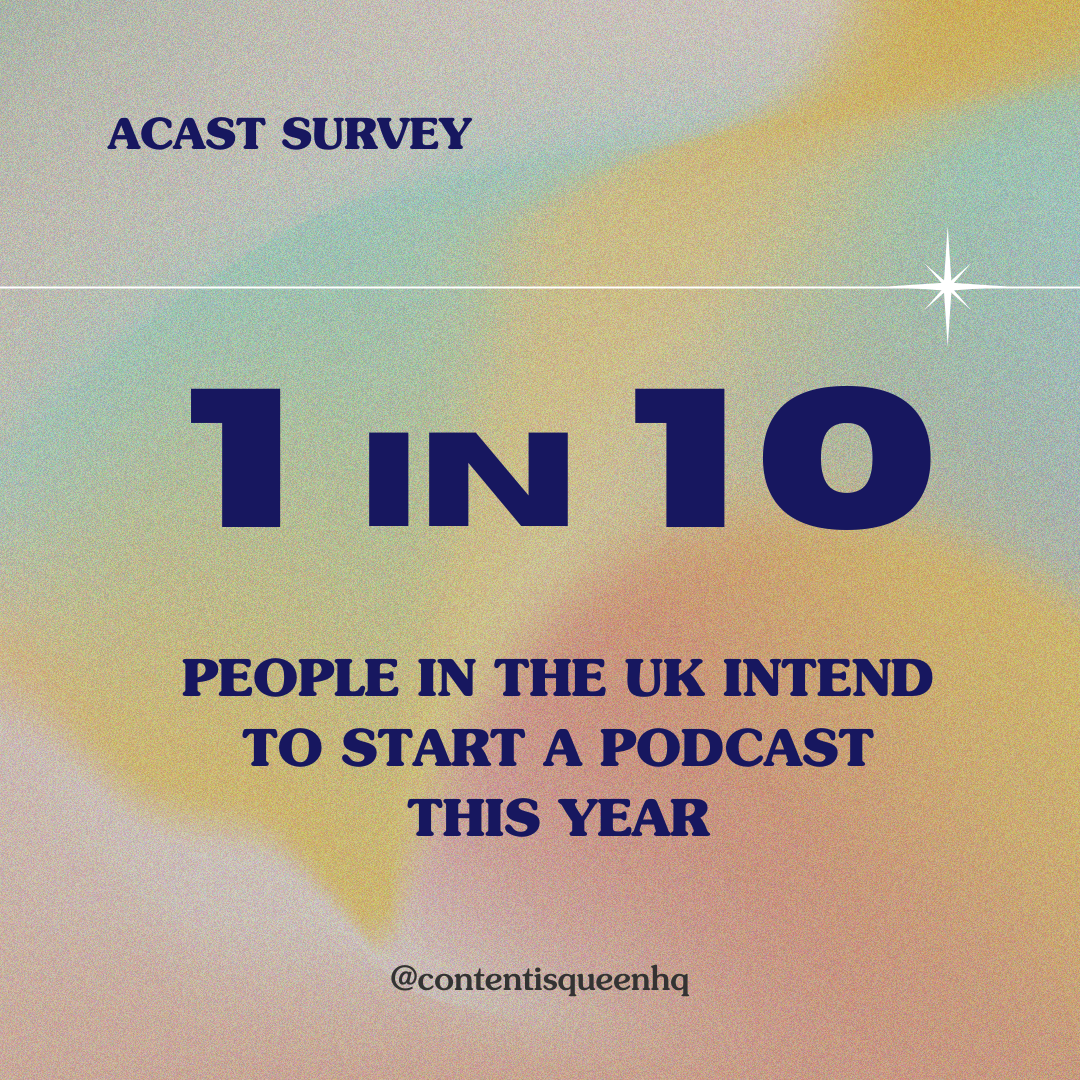
In recent years, podcasting has become increasingly popular and rightly so. As millions are taking to the mic to share their stories as a full-time job, hobby or side hustle, we’re about to see a whole lot more of that, according to Acast. In a recent survey by the world’s leading independent podcast company, more than 1 in 10 brits plan to start a podcast this year. 

In the survey of 500 people in the UK, 12.4% said they intend to join the world of podcasting this year, with 42% of those sharing that the decision was a new year’s resolution. The survey also found that 60% of these respondent’s plan to launch their show in Q1, with February being the most popular month. 

If Acast’s findings truly reflect the wider British public, we can expect to see around 8 million new shows launched in 2022. 

According to The Infinite Dial 2021, over 27 million brits have listened to a podcast in the last month. Of the 16.7 million that listen weekly, a third enjoy four or five episodes, with over a third (35%) listening to 6 to 10 episodes a week. In a nutshell, around 70 million podcast episodes are consumed each week in the UK. 

So, what’s driving the podcast movement? 

A shift in the way we consume
With multiple lockdowns and more time on our hands, COVID-19 has contributed to the growth of podcasts, with 44% of Brits consuming more podcasts since the start of the pandemic. With listeners turning to podcasts to learn new things, explore new cultures, join debates, improve their mental health and escape from everyday life, the evergrowing medium has become part of everyday life for many of us. 

As consumers had more time to listen, creators had more time to record. With everyone from celebrities and industry experts to brands and individuals finding their voice, the past two years have seen creators embrace podcasting like never before. 

The power of technology
Thanks to the mass adoption of Zoom, recording a podcast became easier than ever as both the logistics and costs associated with recording were now eliminated. In addition to the world embracing a virtual connection, with user-friendly audio creation and hosting platforms, the power of technology has made podcasting an accessible medium for creators worldwide. 

Demand for authentic voices
Consumers have been turning to new mediums for trusted voices in recent years, with both social media and podcasting becoming a go-to source for the masses. As many creators have found their voice through social media, podcasting has become an extension, allowing them to foster deeper connections with their audience. 

Last year, we delved into Gen Z listening habits finding that 40% of Gen Z listeners trust podcasts over traditional media sources, including newspapers, radio, and national TV news. Further research has found that it’s much the same across the board. As creators take to the mic to share their unfiltered views on every cultural area, from dating and careers to politics and crypto, audiences value the authenticity that traditional media often lacks. 

If you’re keen to launch a podcast this year, the Content is Queen community is on hand to help you tell your story – find out more about our membership here. 

Before you take to the mic, check out these five lessons in podcasting from Steven Bartlett, the voice of the leading podcast, The Diary of a CEO. 

Finding Sponsors For Your Podcast

We know that listeners turn to podcasts for authenticity and trusted voices. Therefore, your engaged listeners are perfectly primed to act based on your recommendation. Brands know this, and they’re ready to take advantage. In this article, we’re on hand to help you secure the bag and find a sponsor for your podcast. Finding podcast sponsors is the easy part; finding the right ones is what makes all the difference. If you’re ready to cash in without compromising your values, read on. 

How podcast sponsorship works 

Typically speaking, podcast sponsorship is set up in three formats, CPM (cost per mille), CPA (cost per action) and value-based model. 

CPM

With a CPM sponsor, brands will pay you an agreed fee per every 1,000 downloads. While it can vary for each platform and based on the type of ad, with A cast you expect to earn between £4-25 per 1,000 downloads. 

CPA – affiliate basis 

While CPM works well for bigger shows, a CPA model often works best for podcasts with a smaller audience. With a cost per action agreement, your sponsor will reward you for every action – this may be the number of sales, sign-ups, or downloads you drive for them. To measure this, your sponsor may provide you with a unique tracking link or referral code. 

Bonus: with affiliates, you won’t need to offer exclusivity, so you can promote brands that align with your audience on your podcast and across your socials to generate additional income.

Value-based model  

Podcasters with a highly engaged following may find that a value-based model will work best. In this case, advertisers will pay you a flat rate to promote their product or service, regardless of download numbers.

Preparing for podcast sponsorship

Now that we’ve covered the basics of podcast sponsorship, here are three of our top tips to ensure your ready to start reaching out to your ideal sponsors.  

  • Know your niche – after you’ve worked hard to build the trust of your listeners, you’ll want to team up with a sponsor that truly aligns with your brand in order to maintain that trust. Before you start your outreach, ensuring you’re crystal clear on your niche and your audience’s interests is essential. 
  • Prepare a quality pitch – this is your chance to showcase why a brand should sponsor you. In addition to crafting personalised emails, you should create a media kit that includes a description of your podcast, your stats and audience demographics, links to your socials and clips from your podcast. 
  • Fine-tune your marketing strategy – not only will having a solid marketing plan in place benefit your future sponsor, but it benefits your podcast. Take the time to solidify your marketing strategy and showcase it to potential sponsors. If a brand believes in your vision, they’re more likely to invest in you.  

Five ways you can secure podcast sponsorship 

  1. Pitch directly

Granted, pitching directly can be daunting and time-consuming. However, building genuine connections with brands that align with your podcast is an excellent starting point. Furthermore, pitching directly removes the need for any third-party involvement, meaning more money in your back pocket. 

  1. Join a podcast network 

One of the biggest pros of joining a podcast network is the sponsorship opportunities. But, on the flip side, one of the biggest cons is revenue share – weigh up your options after reading our take here. 

  1. Partner with a hosting service 

Many hosting platforms such as Anchor, Buzzsprout and Transistor offer the tools to monetise your podcast and connect with potential sponsors. 

  1. Use a podcast ad marketplace

Podcast marketplaces connect brands with podcasters looking for a sponsorship deal. While competition can be high, you may strike gold on the marketplace with brands offering as much as 30% commission. If you’re not sure where to start, check out Podcorn, Gumball and  Acast. 

  1. Join affiliate programs 

As we mentioned earlier, joining affiliate programs is a great way to establish partnerships with brands. Using platforms such as AWIN or Skimlinks, you can join programs for hundreds of brands and start earning commission right away. Once you’re able to showcase your value to a particular brand, it may open up conversations around sponsorship. 

Finding the right sponsor can feel like an uphill battle. However, this is something you’ll want to get right from the offset. If you could use the help of a supportive podcasting community, Content is Queen has got you covered – find out more about our membership here. Good luck & happy podcasting! 

Is Spotify Trying To Dominate Audio?

Last month, streaming giants Spotify announced that they’re acquiring leading audiobook platform Findaway. As the company plans to spend an ‘undisclosed amount of money’ to purchase the platform, they continue their plan to become the go-to place we consume all audio content.

As part of the announcement, Spotify said: “Together, Spotify and Findaway will accelerate Spotify’s entry into the audiobook space and continue to innovate the industry, working to remove current limitations and unlock better economic tools for creators. Findaway’s technology infrastructure will enable Spotify to quickly scale its audiobook catalogue and innovate on the experience for consumers, simultaneously providing new avenues for publishers and authors to reach audiences around the globe.” 

As Spotify aim to become the leading platform for music, podcasts and now audiobooks, there’s a lot to unpack as we explore their latest move further. 

Money talks 

There’s a lot of money to be made in the audiobook space, hence why Spotify is keen to tap into the market. According to reports from Statista, sales revenue from consumer audiobook downloads in the UK reached £133 million in 2020, up from £97 million the previous year. Much like the UK, stats have followed an upward trend in the US since 2018 as sales revenue reached an impressive $1.3 billion in 2020. 

One of the most interesting aspects of the acquisition is that Findaway currently distributes and displays audiobooks for various apps and platforms, including Kobo, public libraries, Libro.fm and their biggest competitor in podcasting and music, Apple. So simply put, there is real potential that Spotify will be supplying audiobooks to Apple. 

As Spotify is also set to become a bookseller in 2022, it’s safe to say there’s some serious money to be made. 

A single destination for audio 

Spotify setting itself up as a one-stop-shop where you can stream your favourite album, tune in to your favourite podcast, and digest a couple of chapters of a book. If you want our two pence, we predict that Spotify will indeed be dominating the audio in the next five years. In the digital age, we know what listeners value convenience. With Spotify set to house music, podcasts and audiobooks in one space, it certainly offers convenience like never before. 

Another key driver for listeners is often cost, so if Spotify can roll all three audio formats into one affordable monthly subscription, they could win over listeners from competitors. Furthermore, with a huge database of engaged listeners that they know well, Spotify is exceptionally well-positioned to influence listeners’ habits to their advantage. 

The battle for Gen Z Listening

Recent data showcases that digital audio has benefited from the UK lockdowns. According to forecasts by emarketer, digital audio listeners will continuously rise until 2024, as they’ve forecasted an impressive 39.3 million listeners next year. 

With Spotify being the preferred streaming platform for 68.4% of Gen Z listeners, will they win the battle for Gen Z audiobook listeners? If they’re able to emulate their success with podcasting, they likely will. 

As we know, Gen Z turns to podcasts for escapism and healing, diverse and trusted voices and storytelling. So, there’s certainly an opportunity for Spotify to position itself as the new audiobook destination for this particular audience. 

According to a survey released on 1 December by Dolby Laboratories, Gen Z is big on quality. Nearly half of those surveyed who pay for a music streaming subscription want access to the latest cutting-edge audio technologies with their plan. Comparing various types of in-car entertainment, most see the biggest opportunity for enhancing the listening experience when enjoying music in the car (43 per cent), followed by audiobooks and podcasts (23 percent). The takeaway? If Spotify continues to deliver a high-quality listening experience across all three mediums, it’ll continue to be the preferred platform for Gen Z. 

According to reports, Spotify is tipped to overtake Apple as the largest podcast provider before the end of 2021. After moving into the podcasting space just over two years ago, is it just a matter of time before they dominate the audiobook space too?  

A Numbers Game: Can Indie Podcasters Still Make It To The Top In The UK?

Another day, another debate. In a recent discussion within the podcasting community, numbers took centre stage. So, in this article, we’re sharing the numbers that could bag you the top spot as we explore if indie podcasters can still make it to the top in UK podcasting. 

Competing with the giants 

With the likes of Joe Rogan, Kim Kardashian West and the Obamas signing multimillion-dollar deals, what does that mean for indie podcasters? In an article titled “listen up: why indie podcasts are in peril” [Guardian, August 2021], Miranda Sawyer said: “Podcasting, which has been around for about 15 years, is getting its moment in the fiscal sun. We’ve all heard the argument for big money: if cash goes in at the top of a culture, it eventually swirls down and benefits the smaller people.” 

She continued, “Still, Big Money does have a tendency to invest in names it understands (celebrities), or take smaller ideas, brush them up (add celebrities) and make them commercial. In doing so, it can stomp on cultural ecosystems and creative support networks that have been built up over the years. Money skews attention, brings in PR and marketing teams against which smaller shows cannot compete.” 

While Miranda presents some valid points, there’s no need to throw in the towel because the space is becoming more competitive. There are plenty of indie podcasts killing it right now, and you absolutely can too.

At the time of writing, the Chartable Top Spotify Podcasts in Great Britain is peppered with independent podcasts. Today [18 Nov 2021], Sweet Bobby sits at number 10, while The Diary Of A CEO with Steven Bartlett takes the 13th spot (You can read our article of The Five Lessons you can learn from Steven here). The Girls Bathroom is number 26 and For You From Eve is number 30, climbing 11 places this week. One of the most significant climbs up the podcasting ranks comes from Girls That Invest, which currently sits at 36, climbing an impressive 22 spots, while Feel Better, Live More with Dr Rangan Chatterjee sits at 46. 

What do these podcasts have in common? They’re all independent, and thanks to their loyal listeners, consistently in the charts. Are you ready to join them? 

The Numbers
In a 2020 episode of Buzzcast with Tom Rossi – co-founder of podcast hosting platform, Buzzsprout – they explored how many downloads the average podcaster using Buzzsprout gets in 2020. 

 According to their data, in a 30-day period:

  • 98 downloads put you in the Top 50% of podcasts
  • 302 downloads put you in the Top 25% of podcasts
  • 982 downloads put you in the Top 10% of podcasts
  • 2,373 downloads put you in the Top 5% of podcasts
  • 14,959 downloads put you in the Top 1% of podcasts 

While numbers aren’t everything, these stats are a useful gauge of where you’re at now and the kind of numbers that will get you where you want to be. Of course, to get there, you’ve got to do the work and the shameless self-promotion that goes alongside.  

Advocating for your indie podcast   

If you’re keen to move up the ranks and take on the podcasting giants, you need to be your own biggest fan. If you just want to get your message out there, that’s also fine. 

Here are some tips / advice / thoughts from some members of our network. 

‘As independent podcasters without a celebrity host, we know we have to work twice as hard as others to get attention. First things first: we’re dedicated to making a good podcast with a unique format and high-quality production. That’s easily within our control. Beyond that, we’ve worked hard to build our audience through making connections with like-minded organisations and individuals, on social media and offline. Sometimes this is through the people we interview for the podcast, sometimes it’s ‘only’ for audience development. For The Log Books to work, it has to be from and for our community. It’d be a mistake to think we could get an audience without putting in the work to develop connections with our community.’

Adam Zmith, co-producer of The Log Books podcast

‘I think with The Breakup Monologues, my initial priority was to have a consistent brand across different platforms. I always hoped that the podcast would also become a book, audiobook and a live show. Given that they have the same title, each can bring people to the other strands. I also set about using my PR skills acquired during my time as a freelance publicist to get press coverage for the show. A strong clippings folder of reviews and features seemed like a good piece of ammunition to have.’ 

Rosie Wilby from The Breakup Monologues 

‘We are very much resistant to the ‘market of podcasting’ and neoliberal projections of growth. We are interested in broadcasting inclusive political education in a conversational format that makes academic research accessible. Our ambition isn’t to compete with celebrity-facing podcasts, nor are we concerned with chasing downloads or streams. We record and produce our podcast in a hope that it might help people who broadly agree on most aspects of social and political life to better understand the structures and histories instrumental to the shaping of society and how the proliferation of local and global inequalities persist. Emancipatory education is our priority and if more people join us whilst we keep this at the forefront of our work – great!’ 

Chantelle Lewis, Tissot Regis & George Ofori-Addo from Surviving Society 

If you’re ready to take your podcasts to the next level with the support of Content is Queen and our incredible community of indie podcasters, find out more about our membership options here. 

Weighing It Up: The Pros And Cons Of Podcast Networks

Some of the most popular podcasts in the UK and beyond belong to a podcast network. In this article, we’re exploring what joining a podcast network would mean for you as we weigh up the pros and cons. If you’ve been pondering about joining a network, you’ll want to read this. 

The basics of a podcast network 

Simply put, podcast networks are a collection of podcasts that share a common goal – to grow. The podcasts that are part of the network can be produced, distributed, or promoted to advertisers and listeners through a single company. Typically speaking, the podcasts under one network are often connected by similar themes or audiences. 

Networks vary significantly; from one of the longest-running networks, Quick and Dirty Tips which gets 2 million monthly downloads, to more niche offerings such as LadyGang, there is a wide variety on offer. 

How podcast networks operate 

Although some podcast networks are ad-free, most networks help podcasters become more visible to advertisers. Once you’ve joined a podcast network, your network will likely promote your show on their other shows, support your digital marketing efforts, and connect you with sponsors for your show. 

Of course, such a platform comes at a cost and, often, strict entry requirements. While it varies from network to network, the typical requirements include: 

  • Ad revenue sharing – which is usually a 70/30 split 
  • Frequency – at least one episode each week
  • Downloads – typically 1,000 per episode or 5,000 per month (note, larger networks often have higher requirements)
  • Cross-promotion of other shows within the network 

So, now that we’ve covered a top-line overview of podcast networks let’s delve into the pros and cons. 

Podcast Network Pros

Sponsorship opportunities – your network will offer you access to high-paying advertisers, the kind of sponsorships that can be difficult to access on your own. Plus, as networks do the leg work, you can focus on creating content. 

Boosted visibility – as mentioned earlier, many networks will work with podcasts with similar themes or audiences. By joining a network, your show will be in front of thousands of listeners who are your target audience. 

Production support – while not all networks offer production support, many do, which will allow you to ensure your show is of the highest possible quality. 

Credibility – to do well in podcasting, you need trust. Being part of a recognised network often adds credibility and gives your show greater authority. 

Networking opportunities – from meeting like-minded podcasters to finding guests to interview, joining a network is an excellent way to find valuable connections that will help you grow your pod. 

Marketing support – in addition to the opportunity for cross-promotion, some networks will also support you with your marketing strategy. So, be sure to check out what each network is offering. 

Improved insights – networks boast the resources to pull together an in-depth analysis of listener data, which is key to growing your podcast. 

Podcast Network Cons 

Potential loss of creative control – As of now, you’re in complete control of your podcast. However, some networks will ask you to hand over veto power on your content, ultimately giving you less control and creative freedom. 

Revenue share – as mentioned earlier, you’ll have to share your revenue with your network. Typically, you can expect to give 30% back to your network, although it does vary. 

You may have to switch hosting services – it’s not uncommon for a network to want all of their shows hosted and produced using the same platform. Not only can this be an inconvenience, but you may also lose loyal listeners. 

You’ll likely have to end existing sponsorships – if you already have sponsors for your podcast, you’ll likely have to bid them farewell as your network requests exclusive rights and control over your sponsors and advertisers. 

Despite the many benefits of joining a podcast network, there is no guarantee of success. If you’re thinking about joining a network, take the time to carefully consider the pros and cons and what they mean to your podcast. While for many, the pros will outweigh the cons, ultimately, only you can make the decision. As a word of parting advice, do your research, speak to fellow podcasters and take the time you need to make an informed decision. 

If joining a network isn’t suitable for you, perhaps becoming a member of our supportive and knowledgeable community is the next step for you.